
Liquid Biopsy Cancer Screening
A non-invasive blood test designed to detect circulating tumour DNA (ctDNA) for early cancer screening, monitoring, and personalised treatment insights.
Book a Consultation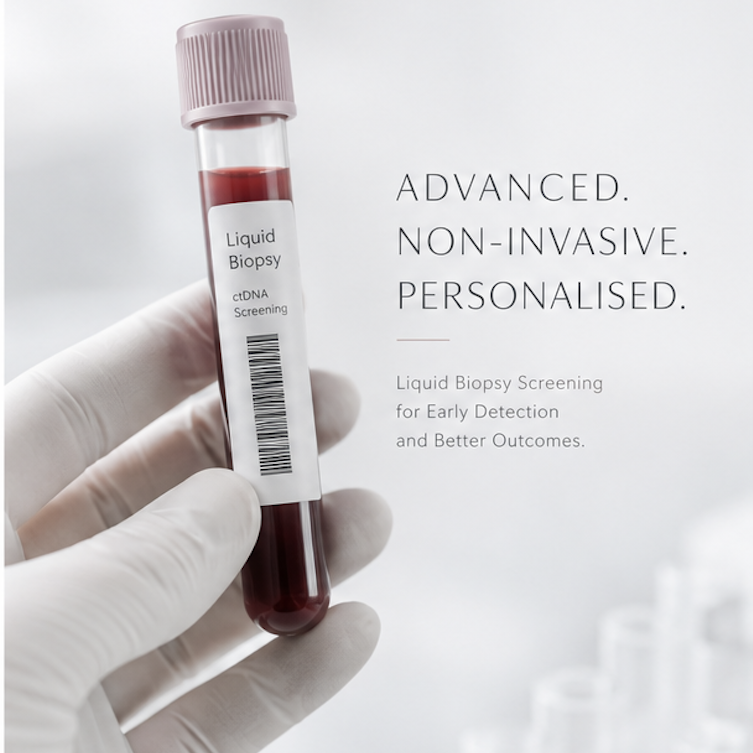

What Is a Liquid Biopsy?
A liquid biopsy is a non-invasive blood test that detects circulating tumour DNA (ctDNA) shed by cancer cells into the bloodstream.
Unlike conventional tissue biopsies, it offers a simpler, less painful approach to cancer screening, early detection, treatment monitoring, and recurrence surveillance.
Why Cancer Screening Matters
1. According to the Singapore Cancer Registry Annual Report 2021, an average of 46 individuals were diagnosed with cancer daily between 2017 and 2021, with 16 deaths recorded each day.
2. Approximately 1 in 4 people will develop cancer in their lifetime. Early detection remains one of the most effective strategies for improving treatment outcomes and survival rates.
How Does a Liquid Biopsy Work?
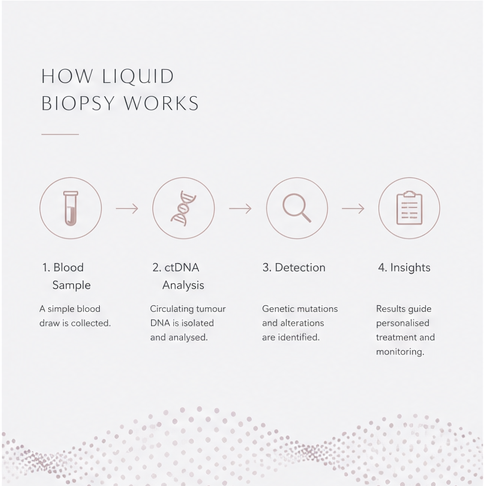
Tumour cells release fragments of their DNA known as ctDNA into the bloodstream.
A blood sample is analysed to detect the presence of ctDNA, which may indicate cancer. The test also identifies genetic mutations and alterations, helping guide further diagnostic workup and personalised treatment decisions.
Benefits of Liquid Biopsy
Minimally Invasive
Requires only a simple blood draw, with no surgical procedures or recovery time.
Early & Broad Detection
Can detect cancer before symptoms arise and screen for multiple cancer types simultaneously.
Real-Time Monitoring
Supports ongoing cancer management and treatment response tracking.
Targeted Treatment Insights
Genetic data from ctDNA helps clinicians tailor therapy to specific mutations.
Important Limitations
1. Liquid biopsies may be less reliable in detecting small or very early-stage tumours compared to tissue biopsies.
2. Test accuracy may vary depending on cancer type and stage, and ctDNA levels can fluctuate over time, affecting result precision.

Liquid Biopsy vs. Other Cancer Tests
Liquid biopsy serves as a fast, non-invasive, multi-cancer screening tool that complements rather than replaces traditional investigations such as tissue biopsies, CT scans, MRIs, gastroscopy, and colonoscopy.
It is best used as an initial screening step or for ongoing monitoring alongside more targeted diagnostic procedures, enabling a more comprehensive and personalised approach to cancer care.
